


Coquet optic review
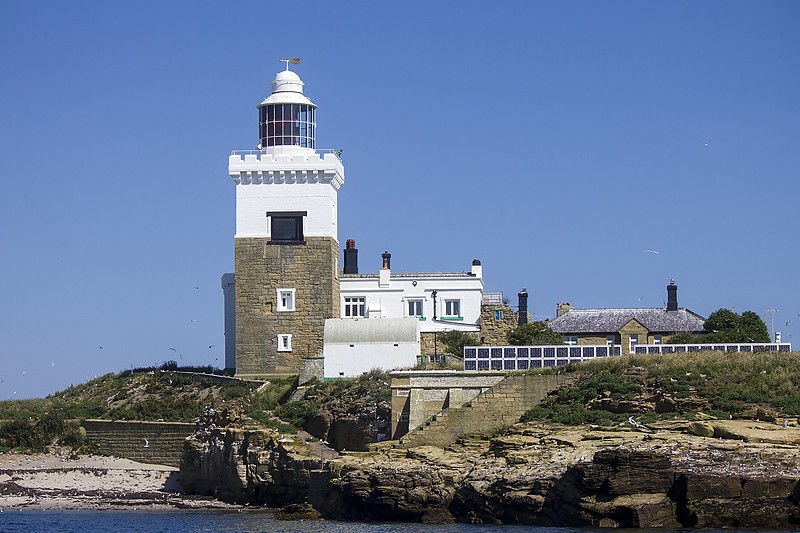
Coquet is an island that lies just one mile off the Northumberland coast (NE England) and a short boat ride away from the fishing port of Amble. The current lighthouse, built by Trinity House in 1841, consists of a sandstone tower with castellations around the upper gallery and additional accommodation sections.
As part of the usual Engineering and Operations annual review of stations, a project was identified to undertake modernisation of the electrical and electronic systems on the lighthouse at Coquet and a project was initiated in 2022. The aim of the project was to address the increasing risks posed by obsolescence in much of the existing electronic equipment. Lamps used in the navigation light, the fog signal, visibility sensor and the aging Programmable Logic Control (PLC) equipment, used throughout the control system, are all obsolete. Other benefits brought by the project will bring more solar power for the AtoN and domestic supplies, new batteries and an improved heating system.
Early in the project, the team identified that the navigation light is comprised of several red and white sectors that would be relatively complex to replicate using the current standard equipment, so an investigation was undertaken to determine the best way to overcome this issue.
Several options were considered including synchronising multiple light sources and re-using the existing rotating optic with a new light source installed. However, each one of these options was discounted due to complexity or ongoing maintainability. It was felt by the team that the best solution would be an old drum lens with red filter material to create the sectors as can be seen in many stations around the UK.
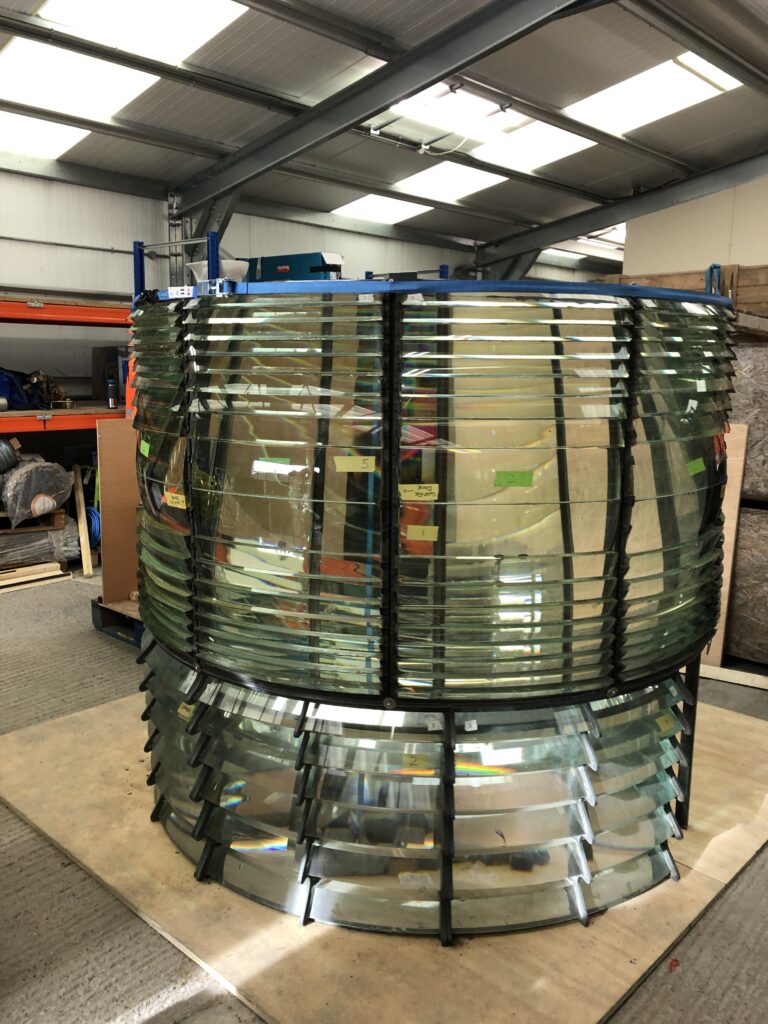
It was noted that a drum lens had originally been installed at Coquet but this had been removed during a previous modernisation project and in recent years had been on display at Souter Lighthouse. An enquiry found that this optic was now located at Swansea Stores and was currently disassembled and packed in several wooden storage crates.
The first task was to ask the GLA Research And Development (GRAD) team at Harwich whether this optic would be able to attain the necessary navigational requirements. Fortunately, calculations gave confidence that the optic would be capable of achieving this requirement however, to make certain, a trial would be required.
At the time of writing an optic trial was planned to take place at Swansea depot. Permissions were sought from the Port Authority to allow this testing to proceed to confirm the calculations previously completed. The test site was not easy to locate, as a minimum distance of 900m line of sight was required, but by placing the optic in the Swansea Buoy Yard car park and placing the light measurement equipment across the dock, a test site with 1300m was found that would be sufficient.
The second task was to build the optic in the depot to ensure all the parts were available and check there was no damage that would stop the optic from being reassembled. This work was completed early in the summer of 2024 with all optic parts located, identified and assembled. There were two main areas of concern: there was a chance that the putty holding the glass prisms in place could potentially contain asbestos, the other concern is the putty drying out such that these prisms were no longer held tightly in place. Further testing revealed no asbestos in the putty enabling further work that will see the optic fully refurbished before installation.
Assuming all testing goes well, the mounting arrangements will need to be manufactured, and all equipment will be transported to site via an underslung helicopter load. The heavy optic sections, weighing up to 85Kg will need to be carefully moved into position in the lantern room and fully installed. The optic has to be given a further test by GRAD to ensure that it is level, and glazing losses do not significantly degrade the light. Finally, a viewing trial utilising a Trinity House vessel will give confidence in the light and ensure that all the sectors are at the correct bearing.
Author: Paul Briggs Programme Manager, Engineering and Project Delivery
Published by kind permission of the author © and the Corporation of Trinity House, London ©.
Rapporteur: Paul Ridgway.